
Kluskap of the Wabanaki
Kluskap of the Wolastoq
The Wabanaki Series brings together Kluskap legends from across the entire Wabanaki Confederacy, Wolastoqiyik (Maliseet), Passamaquoddy, Penobscot, Mi’kmaq, and Abenaki. These works illustrate how Kluskap shaped rivers, calmed winds, travelled with his grandmother, protected communities, and confronted the troublesome beaver whose journeys formed many familiar landmarks.
Each piece is grounded in traditional stories and real locations, many of which Dozay visited, photographed, and explored herself. This series emphasizes cultural continuity, ancestral memory, and the relationships between people, animals, and Mother Earth.
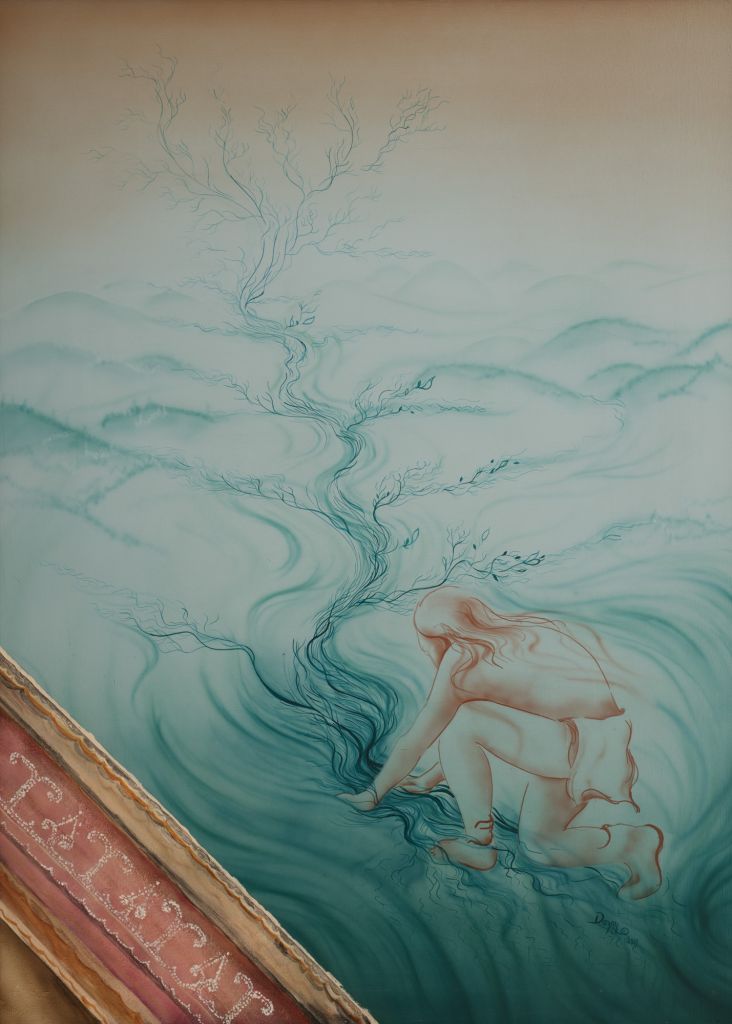
Kluskap Planting Wolastoq
Kluskap was instructed to create the St. John River so it could sustain the Wolastoq people, a place where “the bones of all our ancestors” rest. In this legend, the monstrous frog Aglebe’m hoarded all the world’s water, causing rivers to stop flowing and lakes to dry while people suffered from thirst. Messengers pleaded for the water’s release, but Aglebe’m refused until a great man finally felled a tree onto him, ending his hold. The fallen tree became the river itself, its branches forming the tributaries and its leaves becoming the many ponds that feed the Wolastoq watershed.
Gabe Paul, in Malecite Tales, by Frank G. Speck, Journal of American Folklore, vol. 30 (1917).
Design on bottom: Old woman’s Maliseet peaked hat from Negootkuk. From the Wolastoq Moon Calendar, 2011.
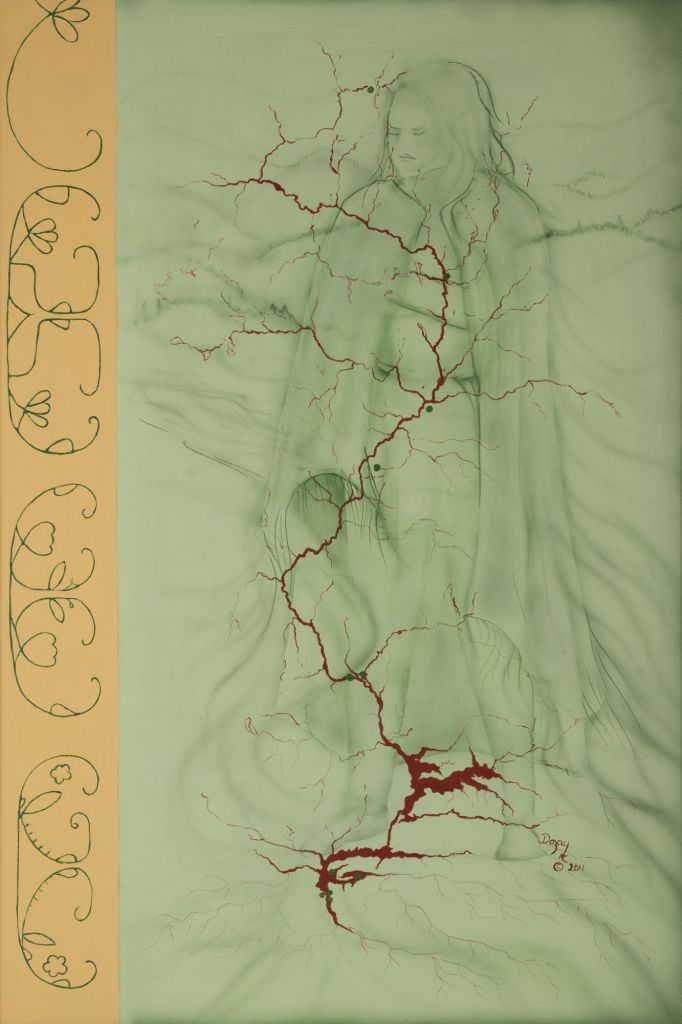
Guardian of the Wolastoq
Kluskap is honoured as the guardian of the sacred Wolastoq River, and the landscape still bears traces of his journeys. His story stretches from the river’s mouth at Saint John, where his grandmother watched over the beaver dam, to the cliffs where his face is said to appear. The route includes the marks left by his snowshoes and the Tobique Rocks farther upstream. Each landmark represents a chapter in his encounters and teachings along the river.
Border design: Maliseet double curve, used in old traditional designs.
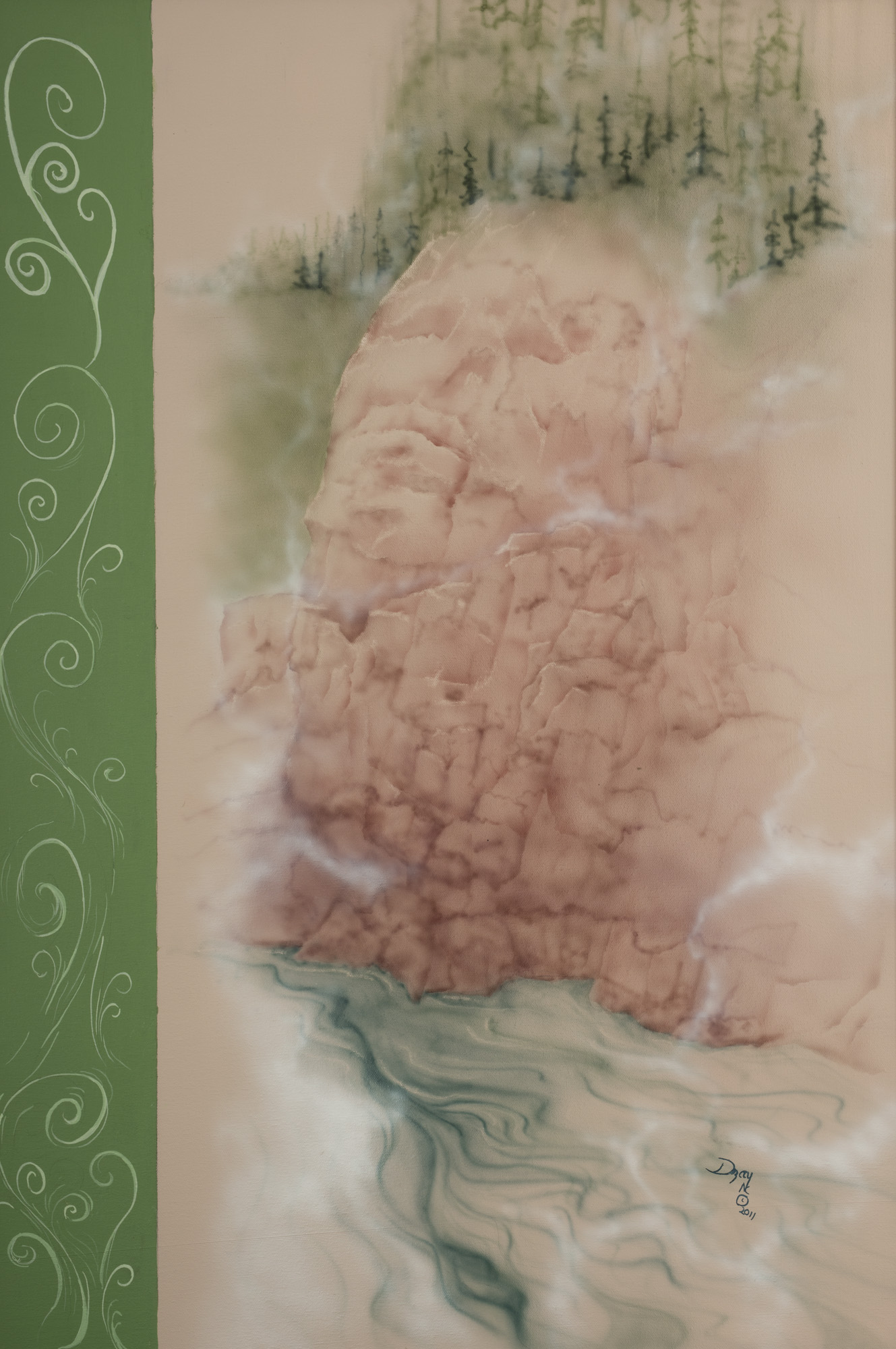
Kluskap’s Face
Kluskap promised to leave his likeness on the cliff so travellers would remember his good deeds as they passed. Near Boars Head, a stone formation resembling a curly-haired man is said to be his mark. People once offered tobacco at this spot to ensure a calm journey down the river. The painting reflects the enduring presence he left for future generations to see.
Gabe Acquin, in Maliseet Legends, by Edward Jack, The Journal of American Folklore, Vol. 8, No. 30 (Jul. – Sep., 1895).
Border design: stylized Mahsos (fiddlehead) which has been very important to the Wolastoq people for centuries.
Kluskap and his Grandmother on their Stone Canoe
Kluskap and his grandmother arrived at Saint John Harbour in a stone canoe so large it appeared to be an island. Their landing at Marsh Creek amazed the people who saw it, revealing the extraordinary power Kluskap carried. His arrival signaled the beginning of his work in the region. This story highlights both his strength and the reverence he inspired.
Jim Paul, in Malecite Tales, by W.H. Mechling, Memoir 49, Anthropological Series No. 4. Department of Mines, Geological Survey, Ottawa, Canada, 1914.
Border design: Canoe design from The Survival of the Bark Canoe, John McPhee, 1982.
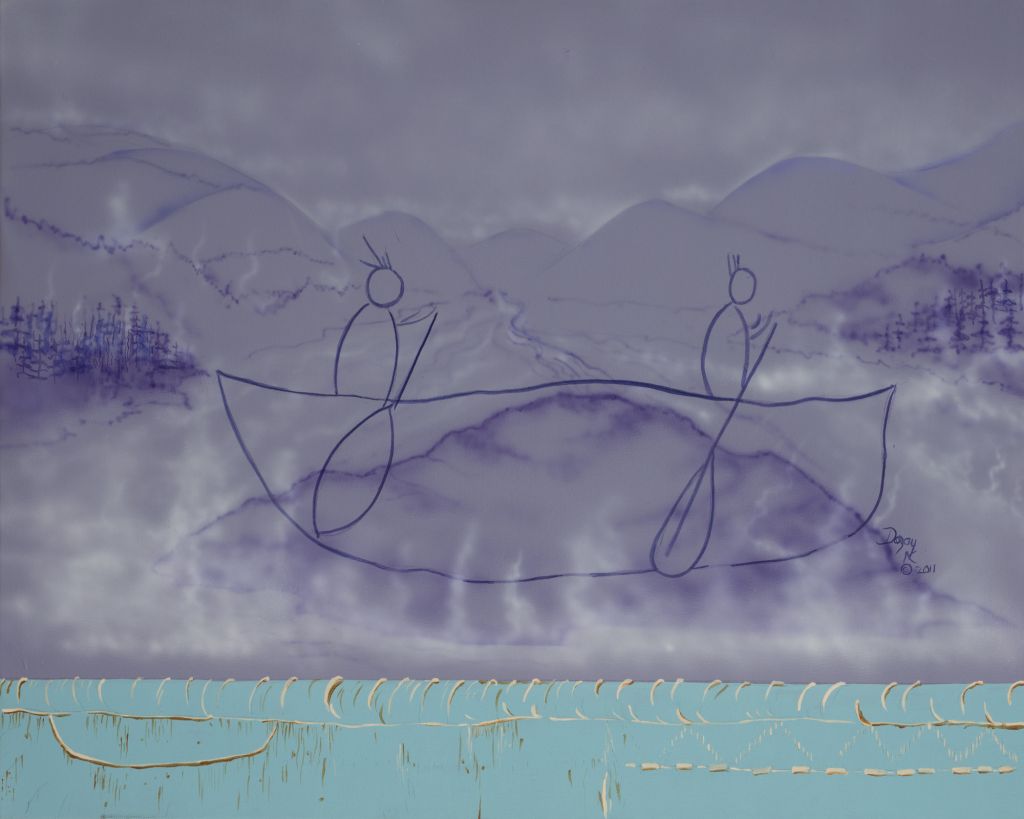
Kluskap Watching Beavers in Kennebecasis
Kluskap followed a beaver to the mouth of the Kennebecasis River, where the animals had their home. After observing them, he returned to the dam at Reversing Falls, continuing his struggle with their mischief. Dozay interprets the amusement on Kluskap’s face as a reflection of their complicated relationship. The story reveals both his patience and the challenges he faced in keeping balance.
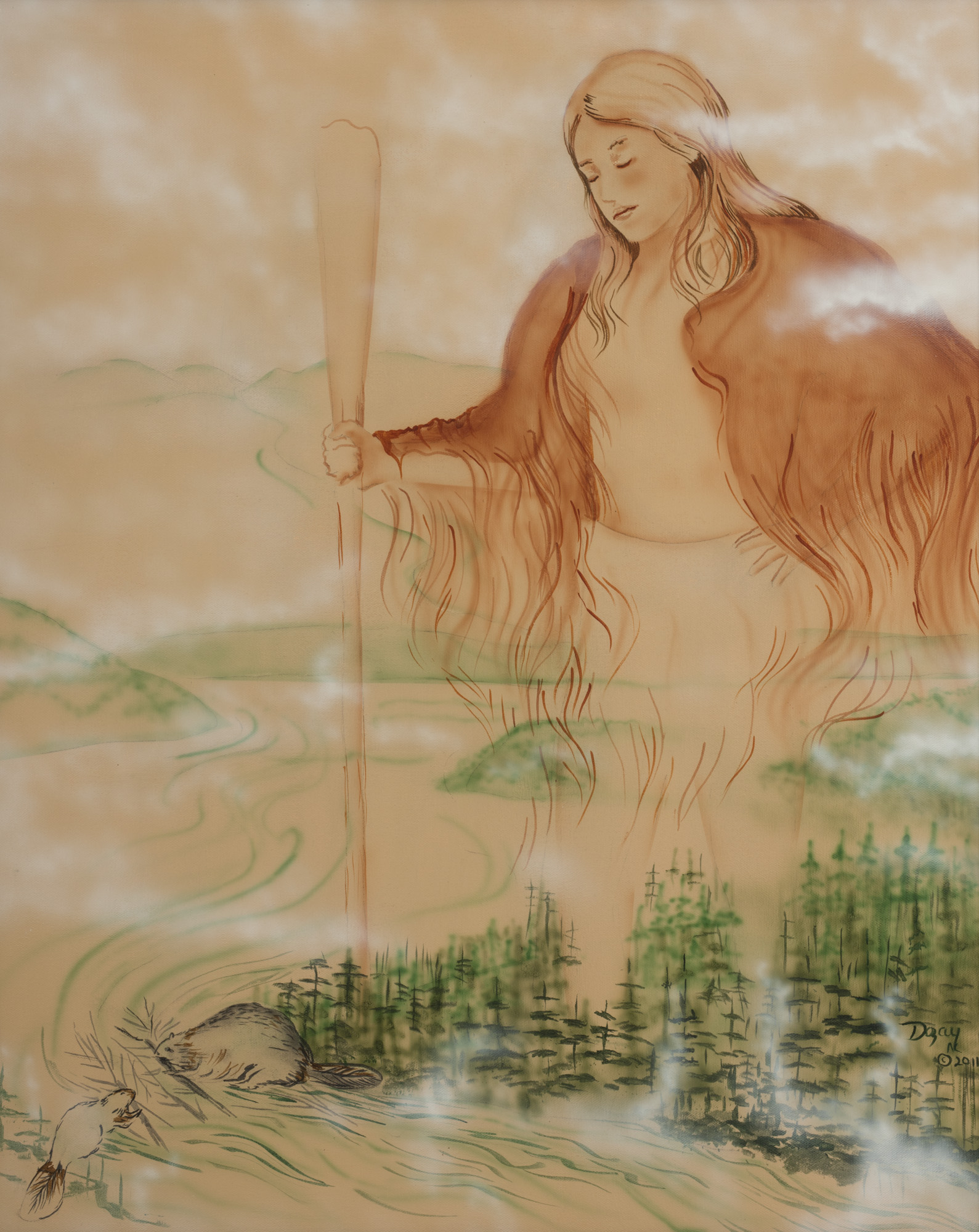
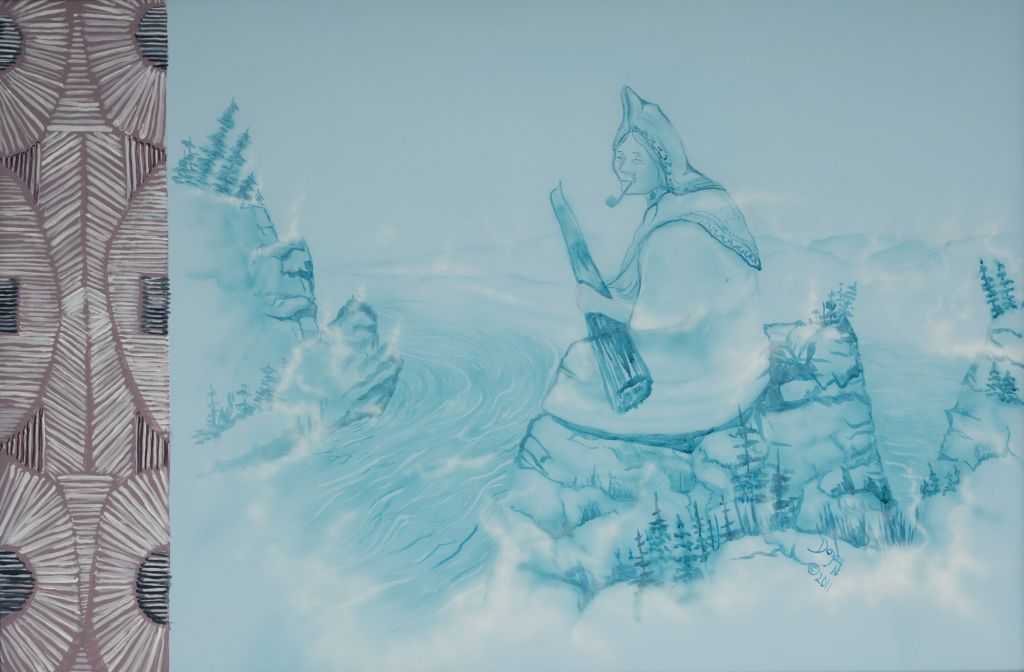
Nokomis at the Entrance
Kluskap asked his grandmother to guard the entrance of the river so no beavers could pass. In earlier versions, she held a spear, but Dozay changed this to a club to honour cultural teachings about women’s roles. Nokomis is shown wearing a traditional Wabanaki peaked hat. Her presence symbolizes vigilance and protection along the waterway.
Jim Paul, in Malecite Tales, by W.H. Mechling, Memoir 49, Anthropological Series No. 4. Department of Mines, Geological Survey, Ottawa, Canada, 1914.
Border design: Quill work Maliseet design used to decorate a birchbark quill basket dated 1815 (Keswick #9.48), in Micmac and Maliseet Decorative Traditions, New Brunswick Museum, 1977.
The Troublesome Beaver Watched by Nokomis
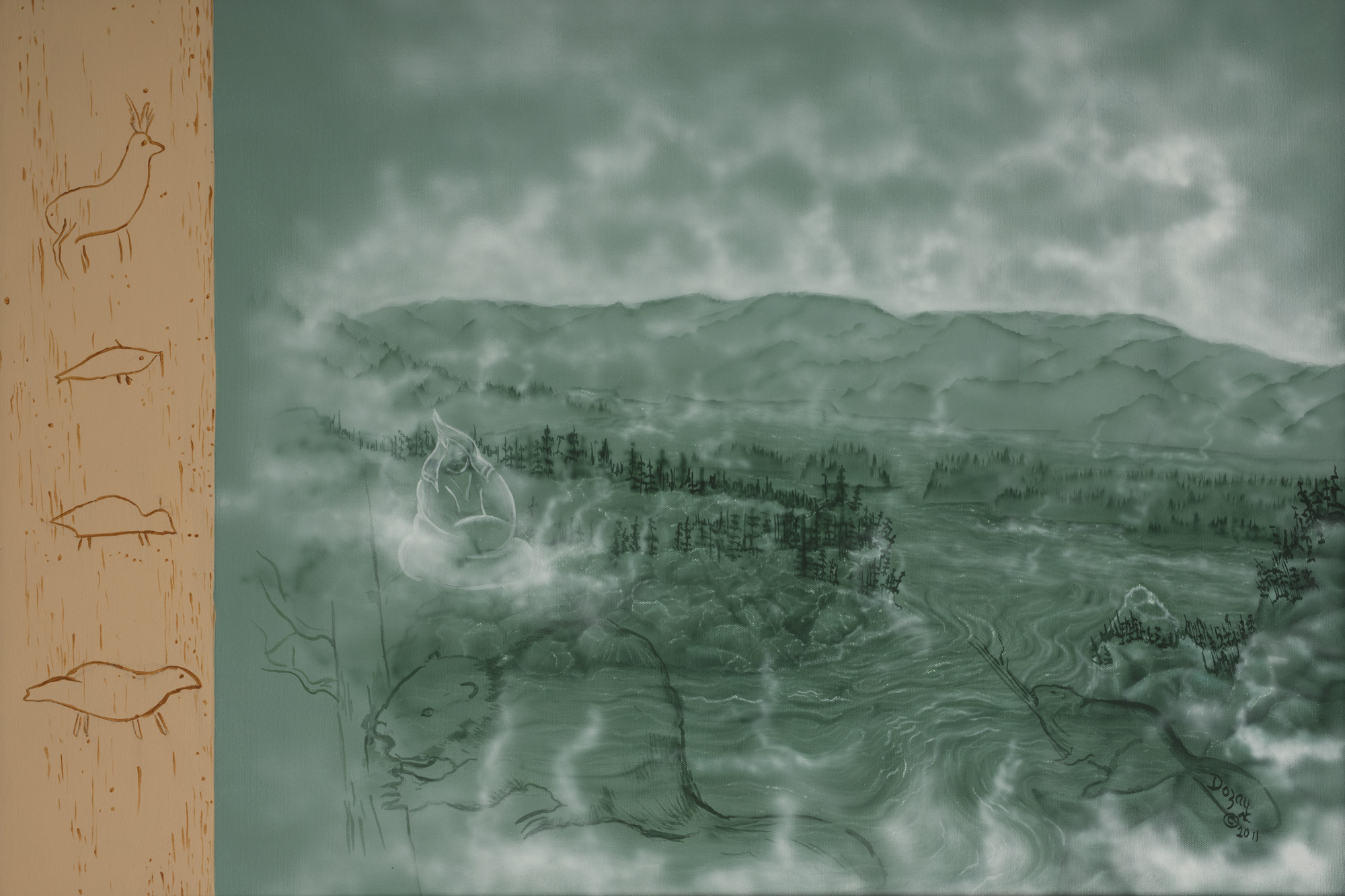
This piece shows another moment where Kluskap’s grandmother watches over the river as troublesome beavers create ongoing difficulties for the Wolastoq people. The repeating tension between people and beaver speaks to many stories in Wolastoqiyik tradition. Through her eyes, we see the constant care required to protect the land.
Border design: Old petroglyph designs on birchbark, source unknown.
Kluskap’s Pack
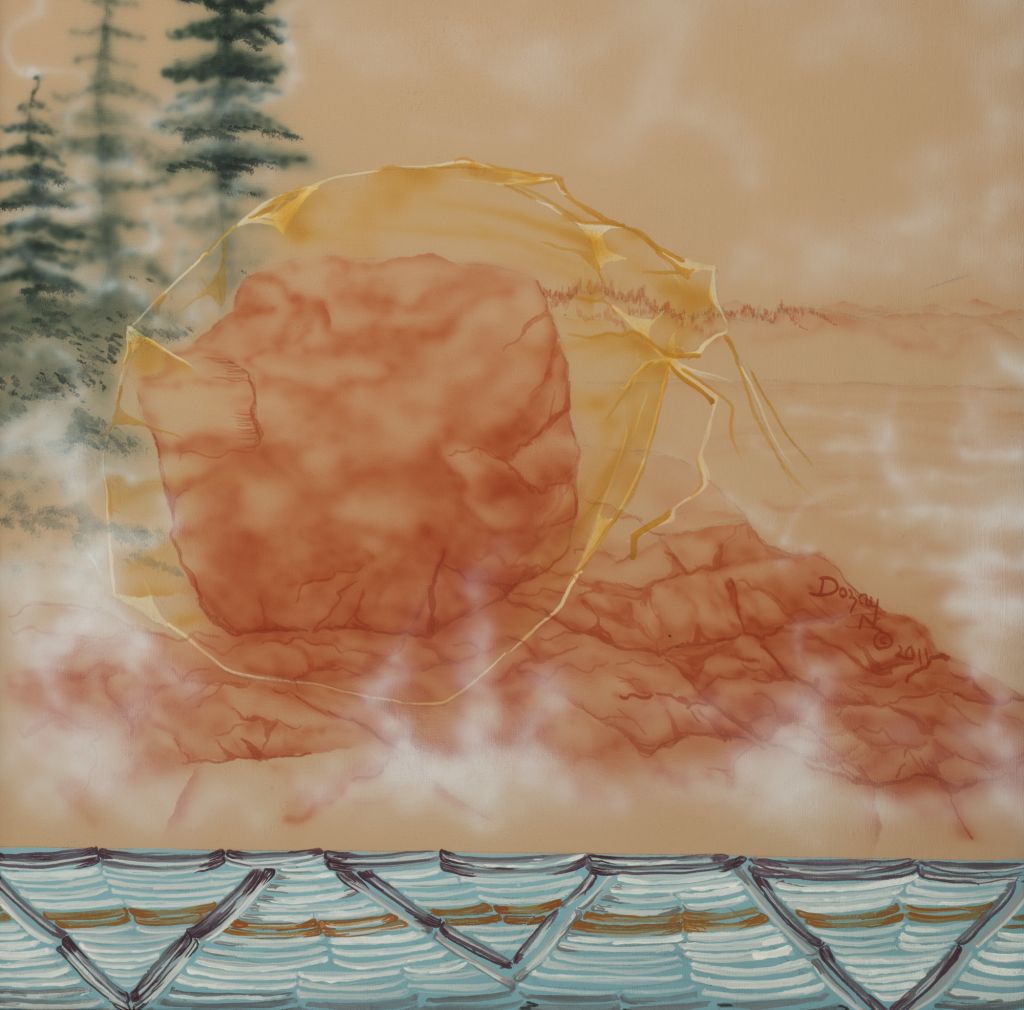
Between Manawagonish Island and Musquash, Kluskap once left his pack behind as he traveled. When he returned, he found a sable had gnawed a hole in it. According to tradition, the mark can still be seen today in the land. The story ties a small detail of daily life to a lasting landmark.
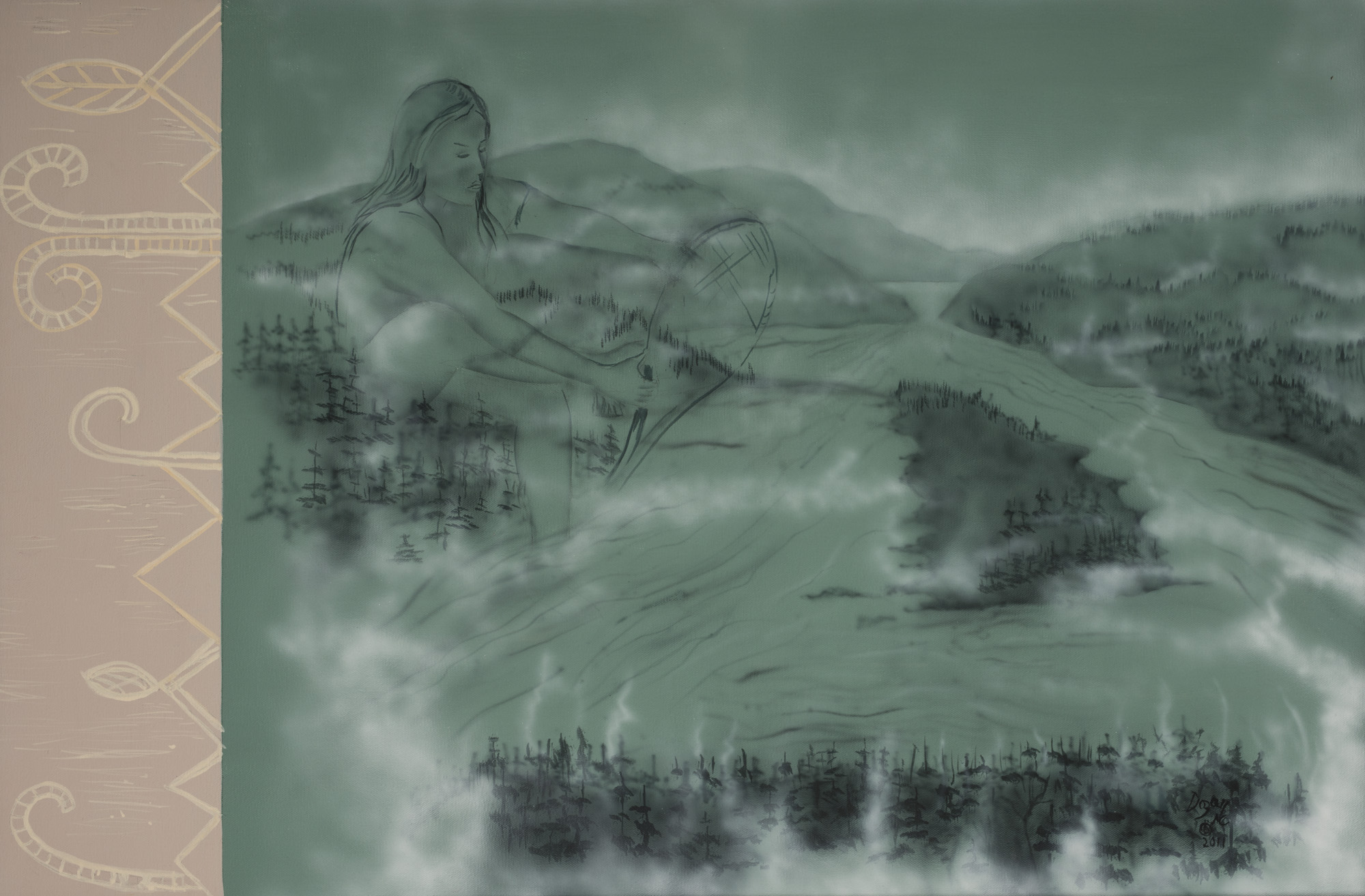
Kluskap’s Snowshoes
Travel near Kingsclear was difficult, so Kluskap removed his snowshoes and left them behind. Two islands opposite Mactaquac were once known as “Kluskap’s Snowshoes” because of this act. The naming connects the landscape to his travels through Wolastoq territory. These islands stand as reminders of his presence on the river.
Jim Paul, in Malecite Tales, by W.H. Mechling, Memoir 49, Anthropological Series No. 4. Department of Mines, Geological Survey, Ottawa, Canada, 1914.
Border design: old birchbark design found on a birchbark basket, fiddlehead etching, Maliseet, late 19th century (#57.173).
Kluskap Summoning the Animals
Kluskap gathered the animals to teach them how to live in harmony with the people of Wolastoq. This painting revisits an older drawing Dozay created for a book on Wabanaki oral traditions. The story emphasizes Kluskap’s role as teacher and mediator among all beings. His lessons shaped the relationships between humans and animals.
Border design: Canoe design from The Survival of the Bark Canoe, John McPhee, 1982.
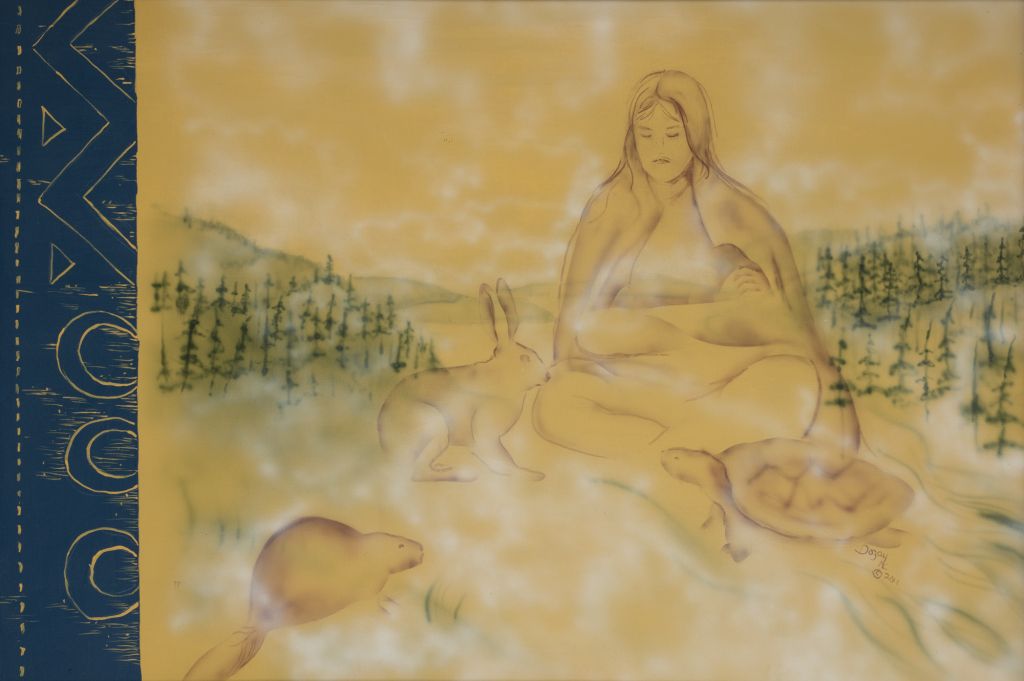
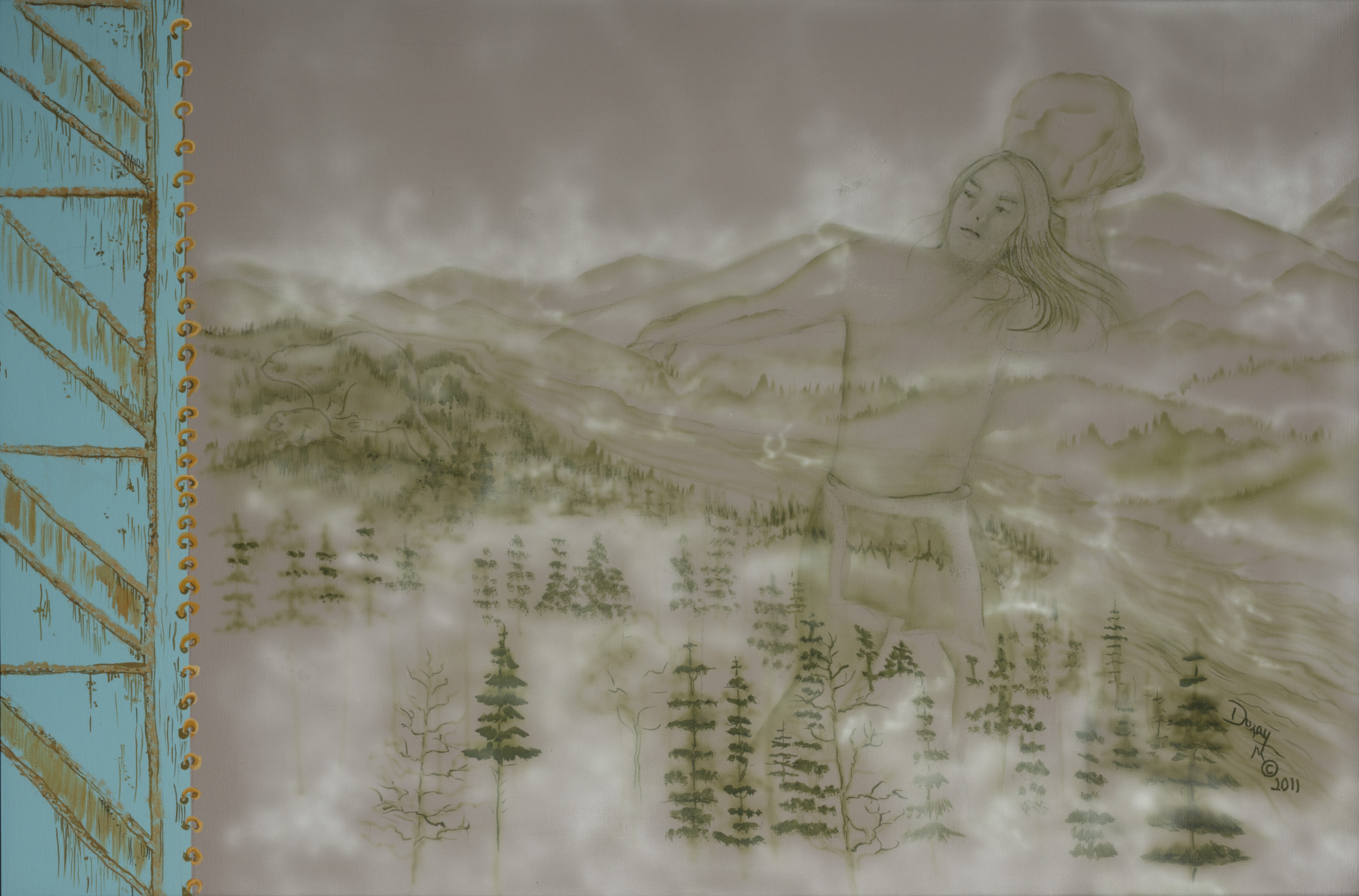
Kluskap Throwing Rocks by Negootkuk
Kluskap was instructed by his brother, Mikumesu, to go down to the seashore and gather two stones to throw upriver ahead of the beaver to scare him back. Kluskap did as his brother directed and threw the stones up the river. He threw them so far that they landed ahead of the beaver and scared him back. These stones are called Tobique Rocks today, about three miles below Perth, New Brunswick, and are now underwater.
Jim Paul, in Malecite Tales, by W.H. Mechling, Memoir 49, Anthropological Series No. 4. Department of Mines, Geological Survey, Ottawa, Canada, 1914.
Border design: Maliseet birchbark basket design found in late 19th century, in Micmac and Maliseet Decorative Traditions, New Brunswick Museum, 1977.
Kluskap Visiting the Little People in Negootkuk
Kluskap’s grandmother told him there were people in Tobique, and he traveled upriver to find them. There he encountered the Little People, central figures in many community stories. Dozay notes hearing these tales from her grandparents and Elders.
Border design: The ancient medicine, Flagroot (kewhuswusk), which is used for all-around well-being and was always found on the shores in Negootkuk. My parents used the medicine for everything from colds to toothaches. I vividly remember having to chew the dried root for a toothache. The taste made me so sick that it caused a very upset stomach. My mom responded with, “Drink the steeped root,” so it’s safe to say it was very powerful. It has now disappeared due to environmental causes.
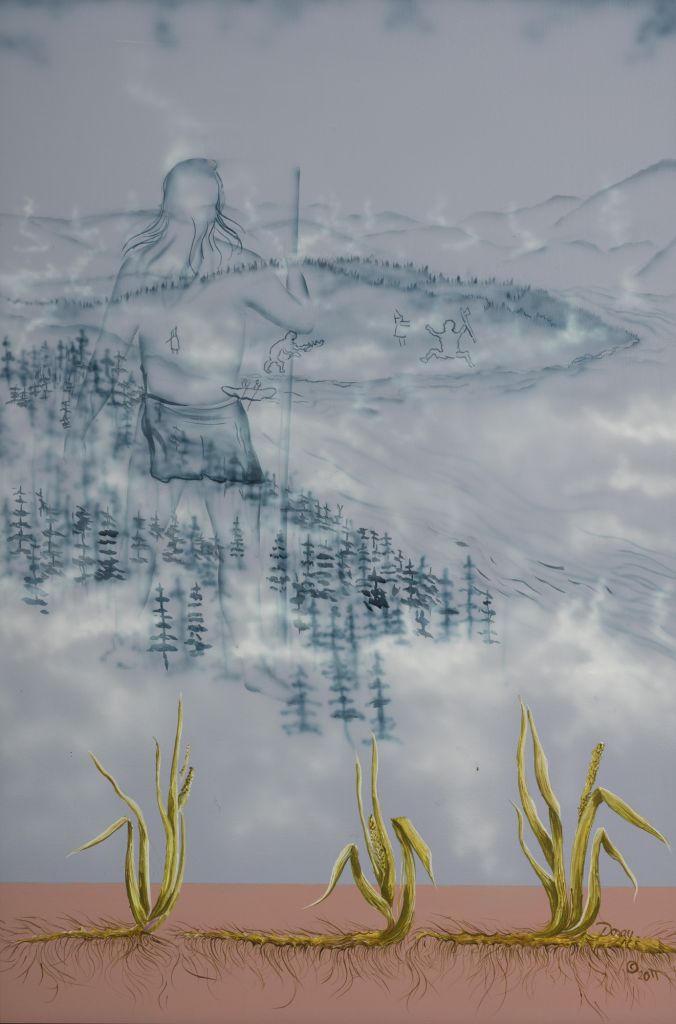
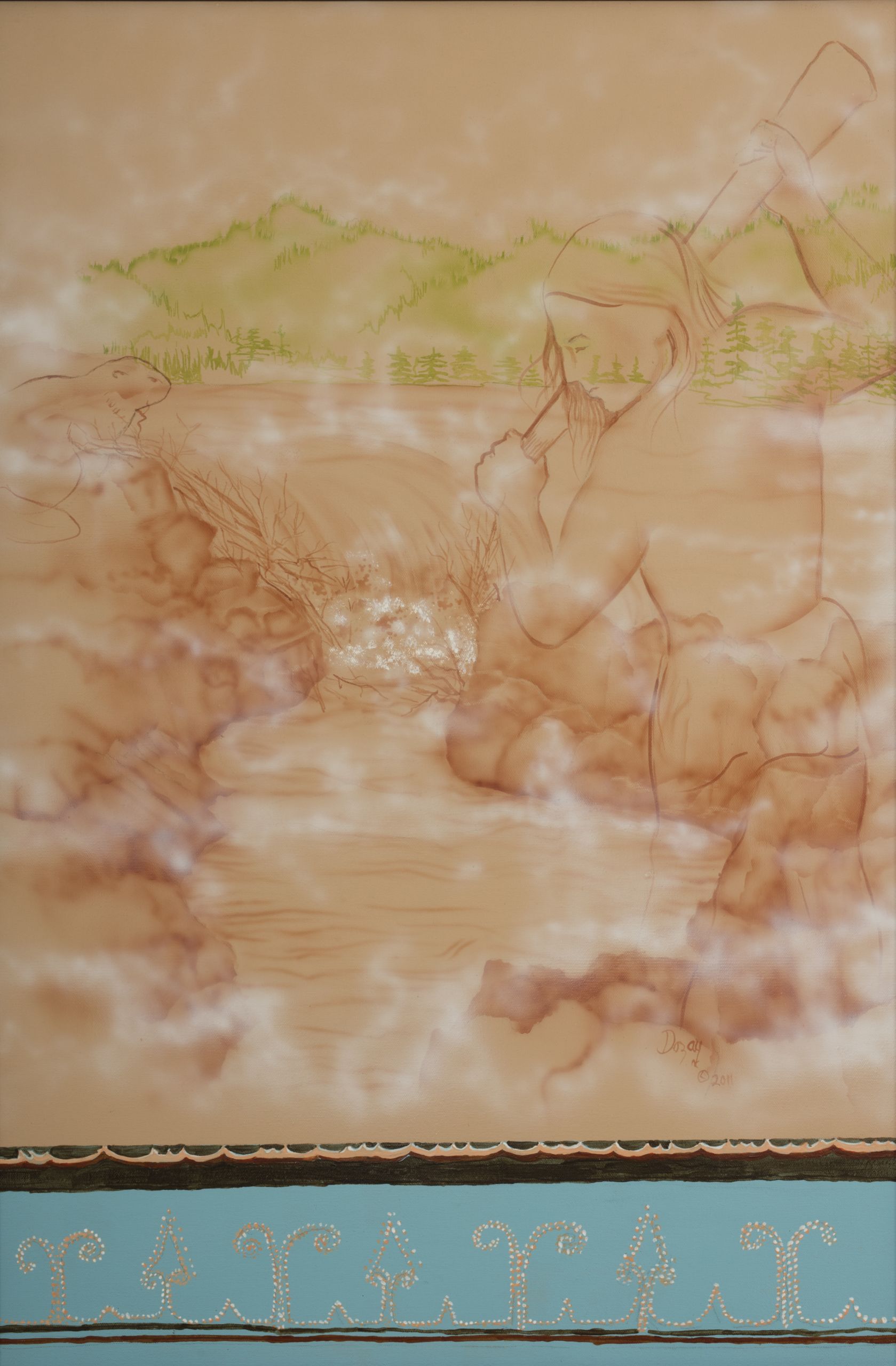
Kluskap in Grand Falls
Kluskap went up St. John River as far as Grand Falls, across which the beaver had built his dam. Kluskap tore it to pieces, as you can see today, and drained the water off. He did this so that, when he returned to Saint John and broke the beaver’s dam there, they would have no other pond to go to.
In Malecite Tales, by W.H. Mechling, Memoir 49, Anthropological Series No. 4. Department of Mines, Geological Survey, Ottawa, Canada, 1914.
Border design: Old Maliseet clothing design found on a traditional peaked hat, Tobique, 1910 (CMC #111-E-28). From the Wolastoq Moon Calendar, 2011.
Beaver’s Wosisek (Cabin)
The Tobique Indians say that the young beaver subsequently took refuge in Temiscouata Lake. They say that the high hill on its shores, opposite the mouth of the Cabano River, is the house which he built after being driven up from the mouth of the Saint John River.
Gabe Acquin, in Maliseet Legends, by Edward Jack, The Journal of American Folklore, Vol. 8, No. 30 (Jul. – Sep., 1895).
Border design: Petroglyphs at French Lake, Oromocto, New Brunswick.
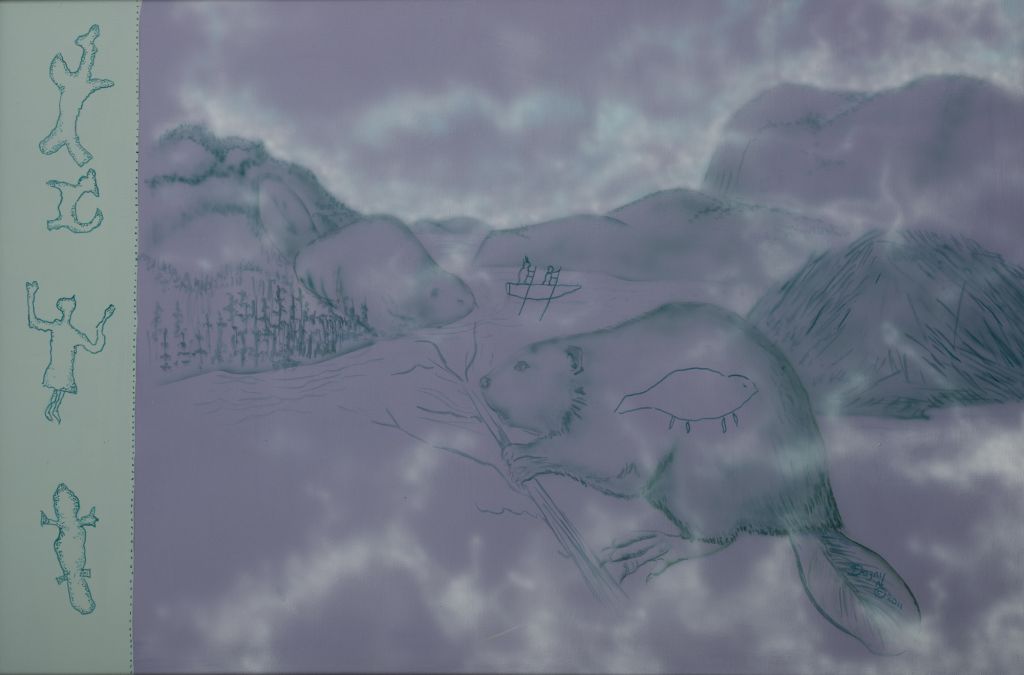
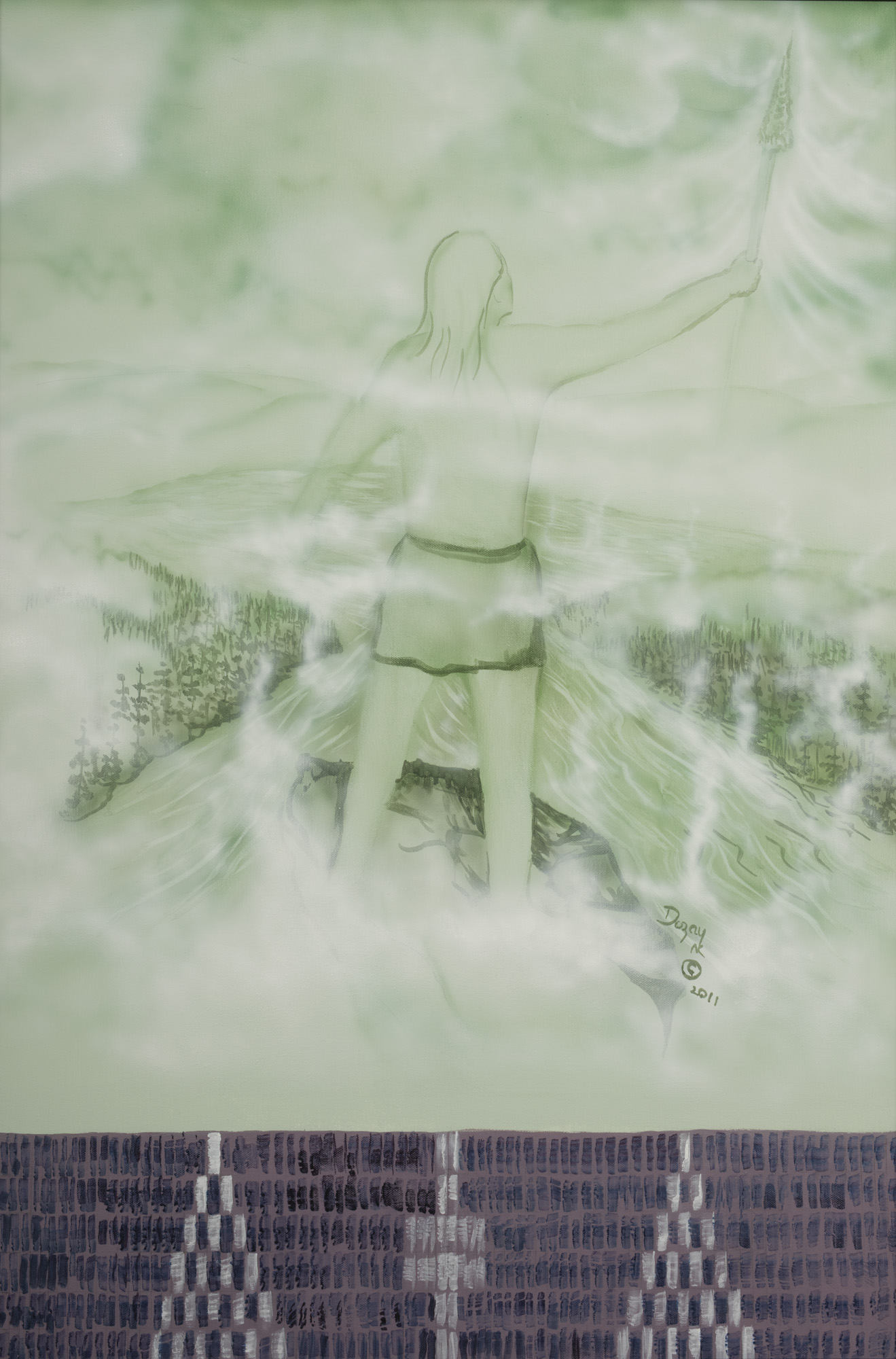
Kluskap Calming the Wind
Kluskap said “I know how.” With that, he stood up in is stone canoe with his stone knife and stabbed into the air. The wind calmed.
In Malecite Tales, by Frank G. Speck, Journal of American Folklore, vol. 30 (1917).
Dozay had wanted to illustrate the power Kluskap had in Wolastoq territory by his will to be able to control everything around him.
Border design: Maliseet Wampum design.
This series brings together the many legends of Kluskap across the Wabanaki homelands, illustrated through the landmarks that carry his stories. Dozay created this work because Wabanaki history and culture have long been overlooked in mainstream teachings, leaving little recognition of her Wolastoqiyik heritage. Through these paintings, she hoped to help her people reconnect with Kluskap’s teachings, Mother Earth, and the landscapes that shape their identity. She envisioned the series as a teaching tool for future generations, offering a unique illustrated record of Kluskap stories from across all Wabanaki territories.